Workflow Graph
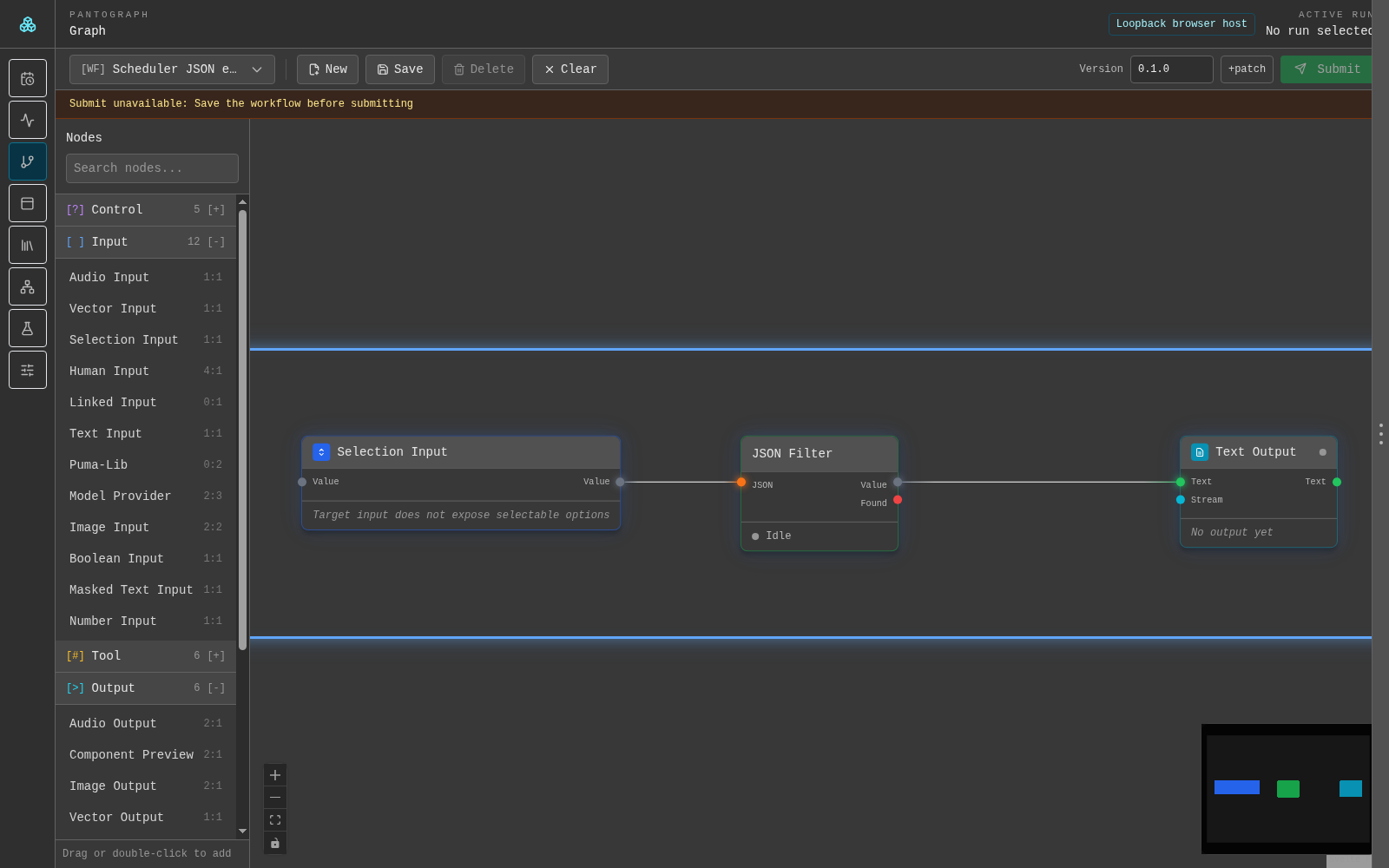
Actual Svelte Graph canvas connected to the loopback host, with backend-produced graph and definitions. Editor submission is outside this host’s capabilities.
LOCAL-FIRST · RUST-NATIVE · INSPECTABLE
Pantograph connects a visual node editor with scheduler-owned execution and explicit inference boundaries. Explore one working deterministic workflow, then the research behind the larger system.
Captured 11 October 2026 · CPU-only JSON extraction · No model inference claimed
Genuine Chromium captures of existing Svelte components connected to a persistent Rust service over loopback HTTP. These are not native desktop windows. The workbench queries live diagnostics and reads actual retained artifact bytes; this static page preserves the recordings. Inspect the source recording. Review branch: PR #71; main awaits review.
Actual Svelte Graph canvas connected to the loopback host, with backend-produced graph and definitions. Editor submission is outside this host’s capabilities.
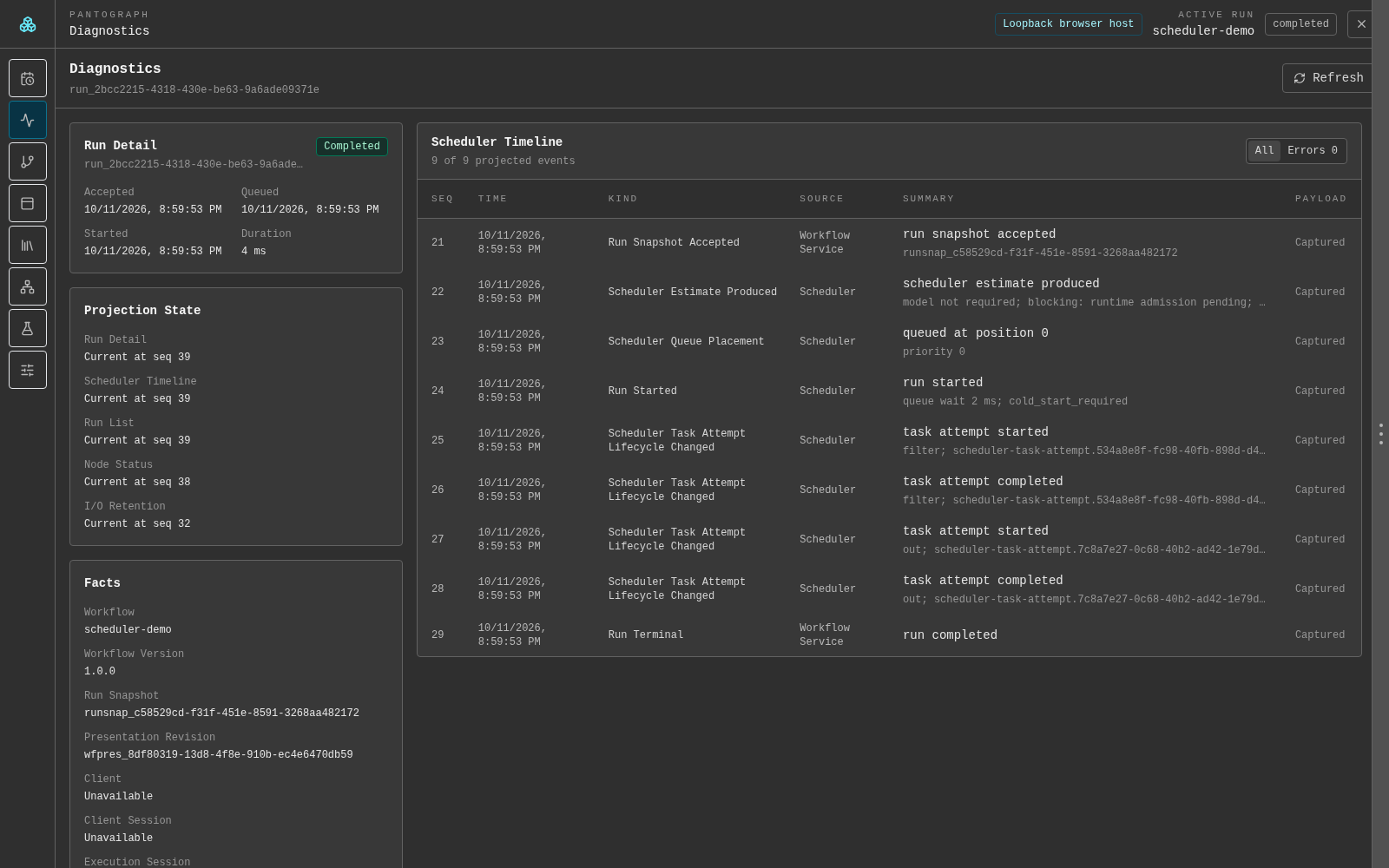
Real Diagnostics component querying the live native service, including completed non-runtime node statuses.
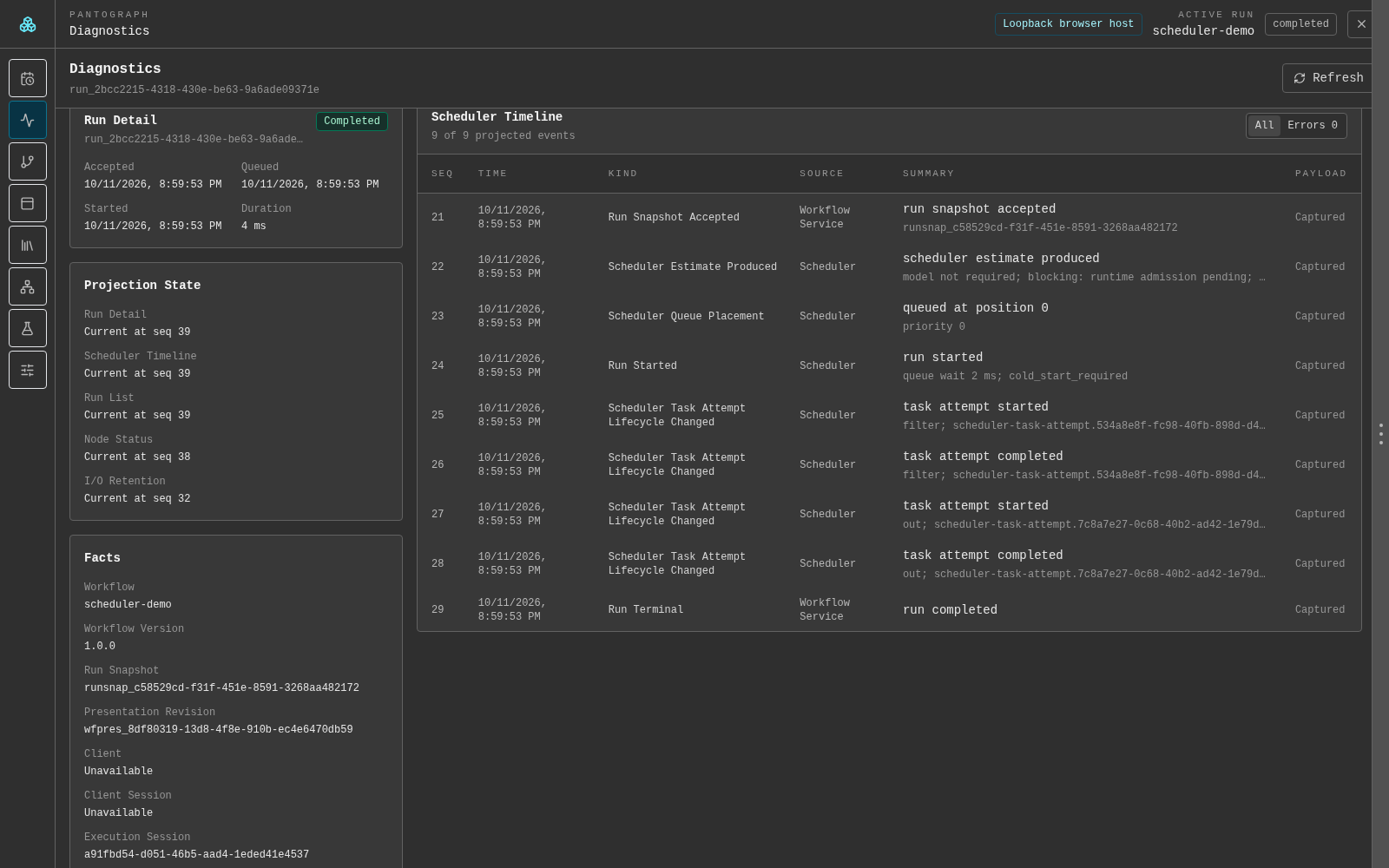
The actual native task lifecycle timeline, scrolled into view. Inspect completed node statuses and the three retained payloads.
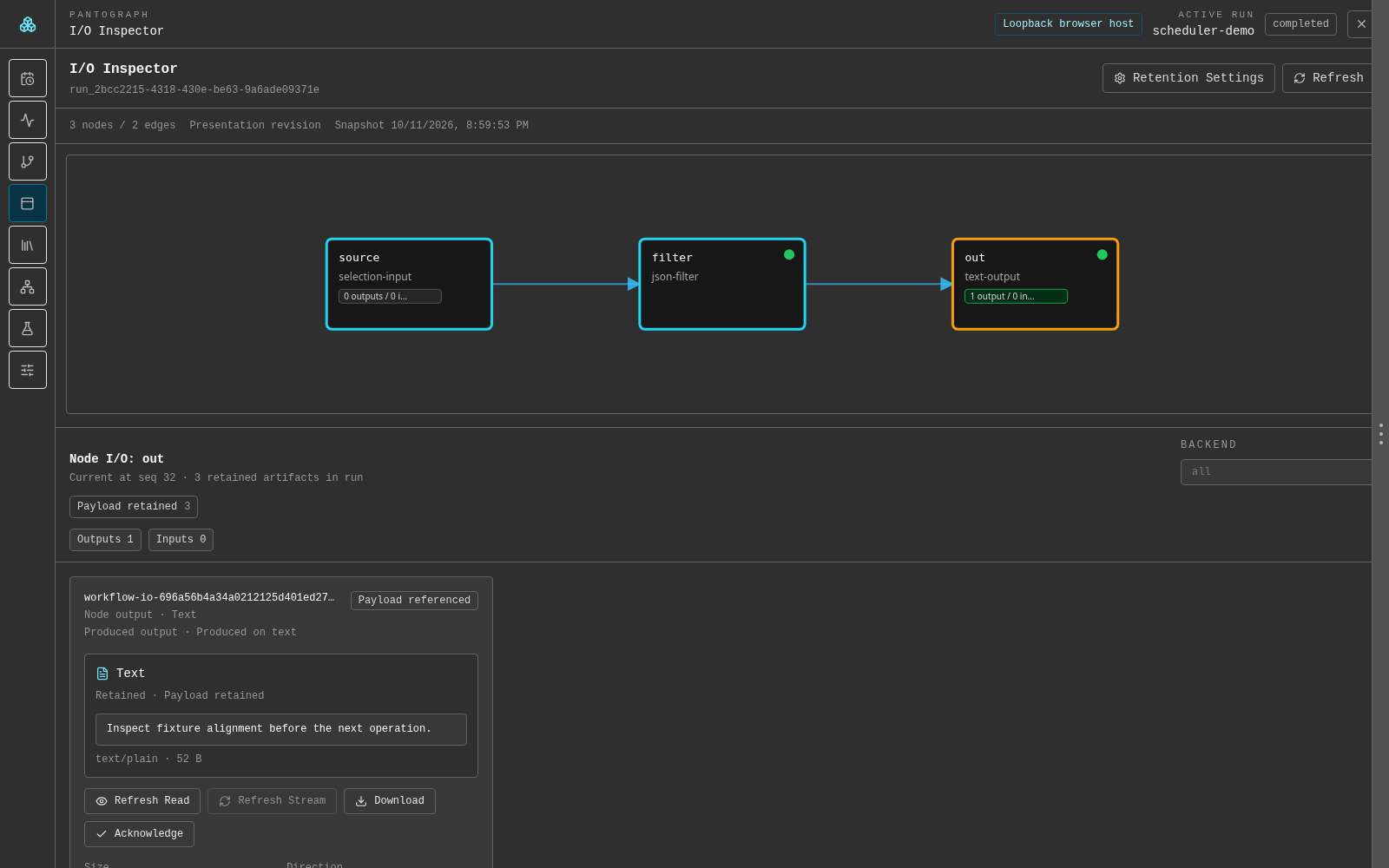
Real inspection component with a live run graph, node status and retained text read through the artifact API.
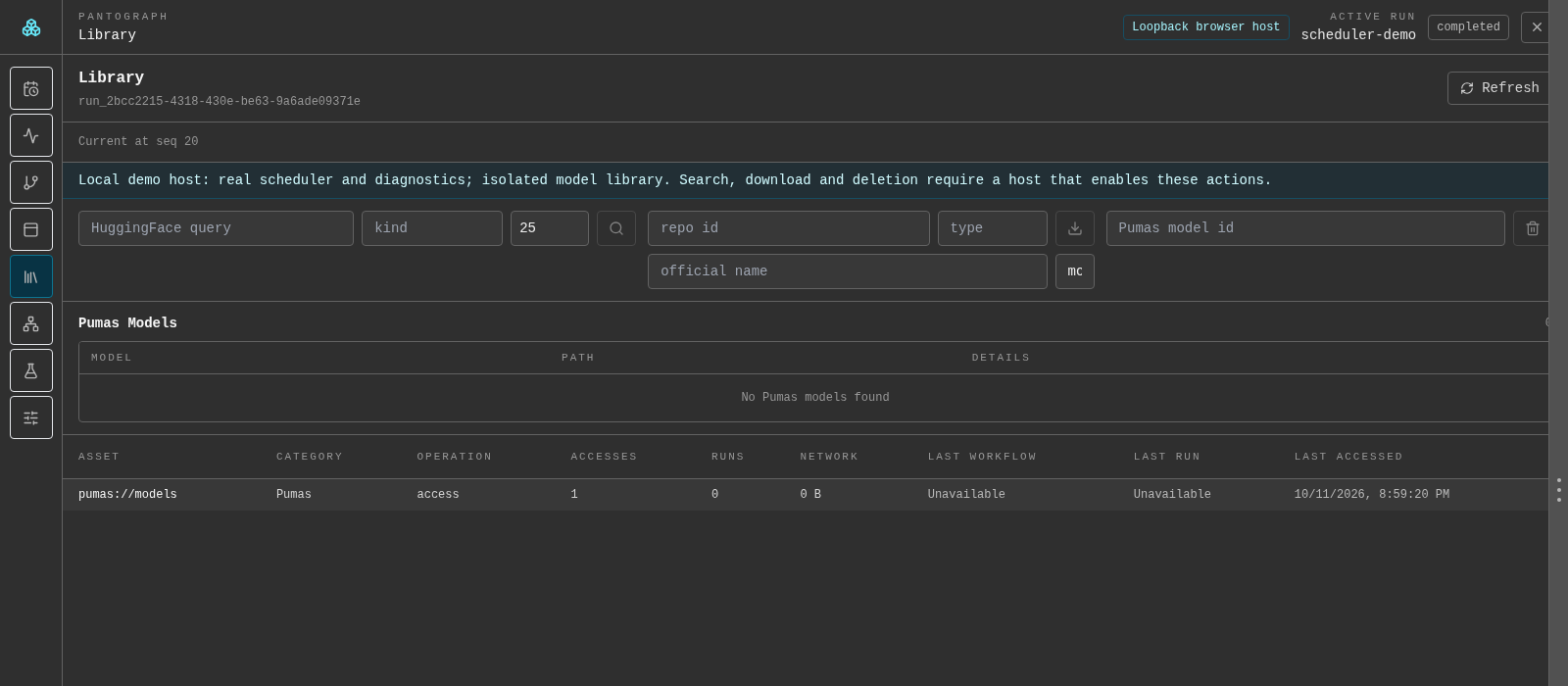
Actual Library component reading a real isolated empty Pumas catalog. Unsupported model-management actions are explained and disabled; no invented models or inference results.
Selection Input → JSON Filter → Text Output. Backend-produced node definitions and the demo graph are loaded into the application's existing stores. Ports and edges are rendered by the actual editor.
Genuine browser capture, with focused fixes for JSON Filter's renderer registration and aligned-wire visibility. The application is connected to the loopback demo host. Graph editing/submission is outside this host’s capabilities; execute through the demo controls and inspect live results in the workbench. The separate Node Editor / Node Lab authoring feature remains unavailable in current source.
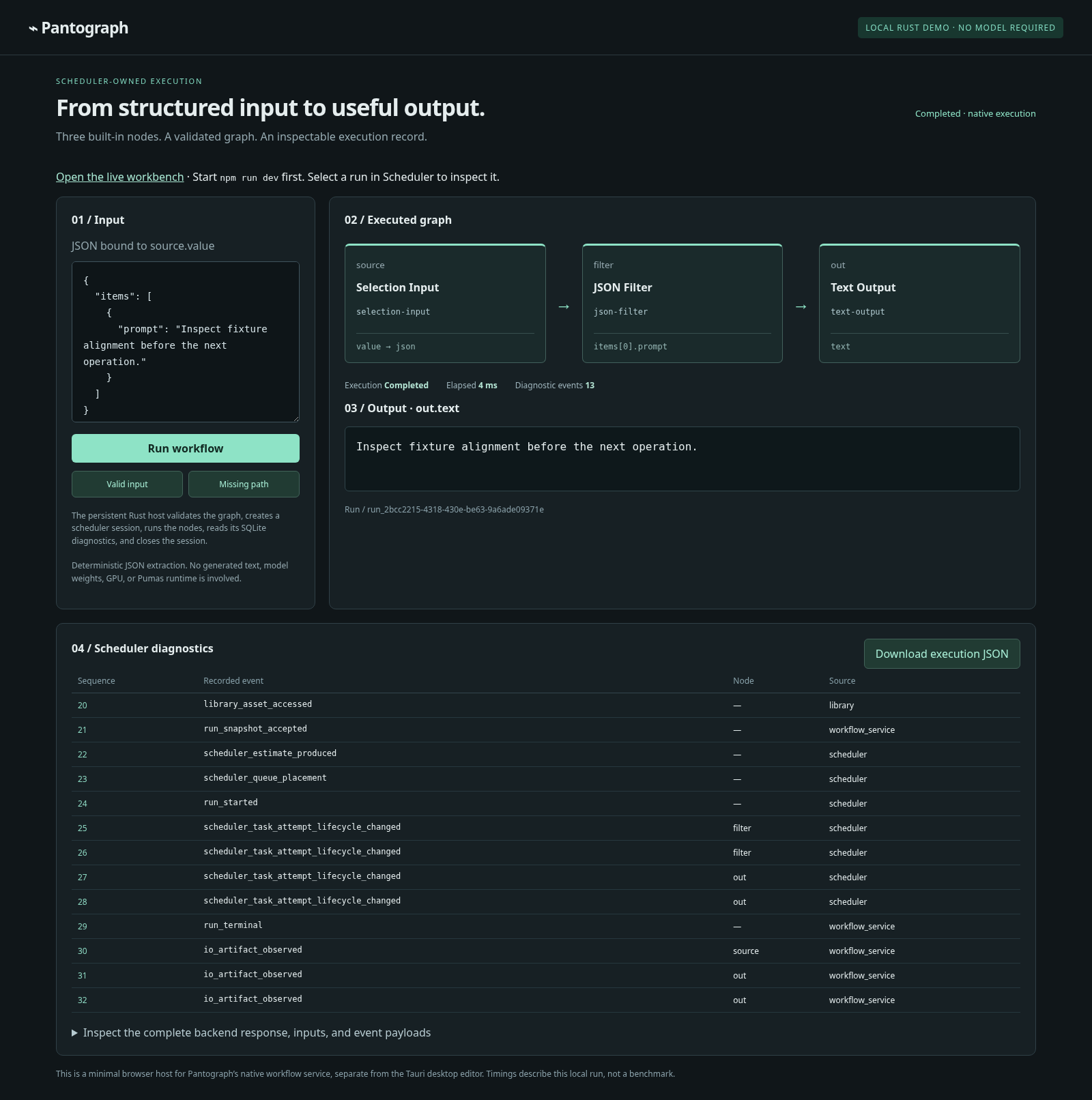
The Rust workflow service validates and snapshots the graph, admits a session run, materializes the JSON input, executes JSON Filter and Text Output, records diagnostics in SQLite, and retains the small scalar output artifacts. No host-returned fixture output is used.
Loading recorded evidence…
Select an event to inspect its original payload.
This interactive view reads captured execution JSON; it does not run Rust in your browser. Local elapsed time is not a benchmark. The rejected run records an invalid downstream task when the path is absent. No GPU scheduling, cache reuse, or model performance was tested here.
Graph and session contracts belong to the workflow service. Scheduler policy owns admission and task execution. Runtime hosts own model loading and execution, while the model library provides artifact and load-target facts.
The deterministic demo exercises the service and non-runtime task path. It does not load an inference backend. Unpublished Pumas fixes and model tests on the developer's computer are outside this checkout and outside this evidence.
Original manuscripts and an evaluation report. Research editions are pinned to 2 October 2026 and source revision 4938e405; they are distinct from this later execution evidence.
Invocation boundaries, lifecycle, extension admission, and what it takes to qualify a node.
Source audit + proposed contracts → SCHEDULER · PAPERResource safety, learned execution costs, and completion-oriented scheduling.
Inspected constraints + proposed v2 design → SCHEDULER · SIMULATIONC3-corrected standalone simulation evidence, with historical populations kept separate.
Simulator results; not a production benchmark → INFERENCE · BOOKModel identity, semantic task contracts, backend ownership, and qualification before promises.
Source-grounded comparison + architecture proposals → EVIDENCE · PAPERIdentity, result commitment, retention, crash consistency, and evaluation contracts.
Source audit + proposed evidence contracts → RESEARCH INDEXImmutable source references, manuscript identities, and the distinction between research and accepted implementation work.
Read the evidence policy →With the repository's pinned Rust toolchain and Python 3:
python3 examples/scheduler-demo/serve.py
Open http://127.0.0.1:8765. Run the valid input, change the prompt, then try the missing path. Each response includes the actual run identity and its recorded diagnostic payloads. To inspect the running service in the real Svelte workbench, start npm run dev in another terminal and follow the demo host’s Open the live workbench link. See the pinned guide for prerequisites and host limits.